Canada’s CCUS Sector Is at a Defining Moment

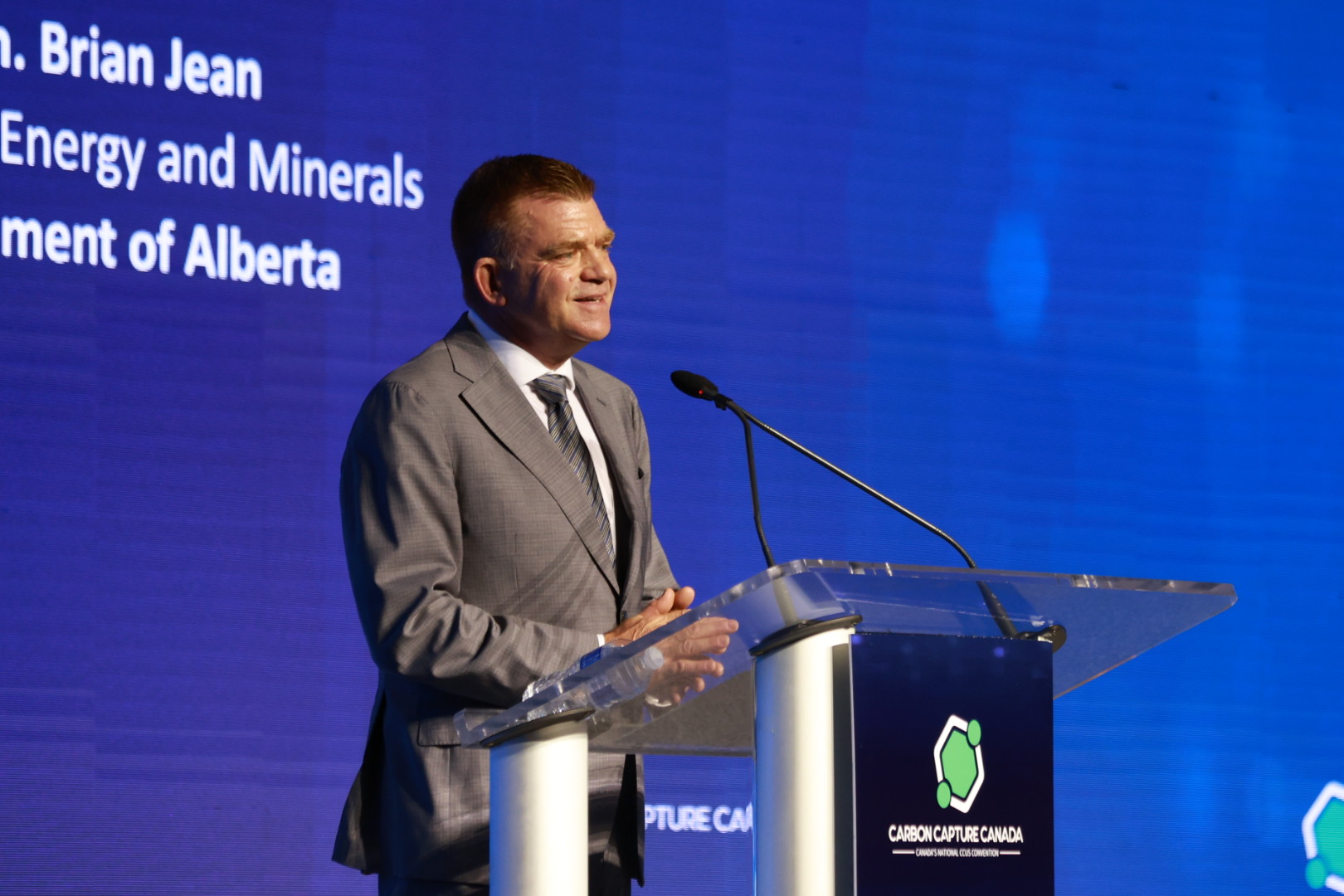
The global CCUS sector is entering a critical execution phase, and Canada arrives at Carbon Capture Canada 2026 with more tangible progress and more open questions than at any previous edition of this event. 

Deep Sky Alpha, Canada's first cross-technology direct air capture hub, became fully operational in Innisfail, Alberta in August 2025, hosting technologies from GE Vernova, Airbus, and others, and has already secured a ten-year carbon removal offtake agreement with TD Bank Group. Heidelberg Materials' Edmonton cement plant is on track to become the world's first full-scale CCUS facility in the cement industry, anticipated to be operational by late 2026 and capturing over one million tonnes of CO₂ annually.

These are no longer proposals, they are projects under construction or in operation, right here in Alberta. 

image

At the policy level, the federal government's Spring Economic Update 2026 extended the CCUS Investment Tax Credit to cover Enhanced Oil Recovery, fulfilling a key commitment made under the November 2025 Canada–Alberta MOU. In May 2026, the federal government proposed a hard one-year cap on major project approvals, a potentially transformative change for CCUS developers who have historically faced review timelines of five years or more.

Yet serious challenges remain. The Oil Sands Alliance, formerly Pathways Alliance, has not reached a final investment decision on its proposed $16.5 billion CCUS network, following its April 1, 2026 trilateral agreement deadline. Ongoing negotiations between federal and provincial governments over carbon pricing levels, cost-sharing, and provincial incentives mean that Canada’s largest proposed CCUS project still faces significant uncertainty. Bankability, policy durability, and interprovincial coordination are central themes of this year’s conference, and they have never been more urgent. Recent federal-provincial commitments to advance Alberta’s Pathways CCS project alongside new pipeline infrastructure have brought these issues into sharper focus.

With the US Department of Energy walking back funding for carbon capture technologies, Canada has an opportunity to position itself as the global leader in CCUS, but seizing that opportunity requires alignment across industry, governments, and financial institutions that has so far proved elusive. 

2026 CONFERENCE THEMES

Canada's Carbon Advantage

1 (1)

Converting policy momentum into capital committed and projects delivered.

Canada has the policy architecture, the geology and the incentives, with the April 2026 expansion of the CCUS Investment Tax Credit (ITC) to include EOR being the latest signal. What it still needs is the regulatory certainty and long-term price visibility that convert strategic positioning into final investment decisions. This theme sets the national frame: where the policy stands, where Alberta's advantage is real, and what closes the gap between announcement and committed capital.

The Bankability Test

2 (1)

Turning carbon policy into contracted, investable cash flow.

Capital isn't asking whether CCUS is viable, but whether the revenue holds up for thirty years. Canada and Alberta's Carbon Contracts for Difference (CfD) and the new TIER price floor are steps toward the certainty lenders require, but credits, ITCs, CfDs and offtakes still need to stack into something a project finance team can model to FID. This theme brings the full financing conversation into one room: what makes a revenue stack fundable, and where the gaps are still leaving viable projects stranded.

Carbon Intelligence: AI, Data and Digital Infrastructure

Screenshot 2026 06 24 101811

Making CCUS projects smarter, cheaper and investor-ready.

As CCUS projects scale from single facilities to interconnected hubs, the gap between high-performing and underperforming assets is increasingly a data problem. Digital twins, AI-driven reservoir modelling and automated MRV are turning operational performance into a measurable, auditable advantage, and the projects that demonstrate it are attracting better capital on better terms. Carbon Capture Canada will examine where AI is cutting cost per tonne, how digital twins are becoming the connective tissue of multi-emitter hubs, and what data maturity needs to look like before regulators and investors treat it as decision-grade.


Carbon Infrastructure Economy

5

Building the shared backbone the next decade of projects depends on.

No single project will deliver Canada's decarbonization ambitions on its own, the country needs shared storage hubs, dedicated pipeline corridors, and coordinated public-private investment built at scale. Getting there means resolving anchor emitter agreements, storage rights, tolling structures, and the permitting and jurisdictional friction that slows hub development today. This theme looks at what it actually takes to move a hub from concept to commercial operation, and what the first movers have already learned the hard way.

Technology Readiness & Deployment

6 (1)

Bridging the gap between proven technology and commercial-scale delivery.

Svante, Carbon Clean and a maturing field of modular, sector-specific solutions are moving from pilot success to first commercial deployments. The question for project teams is no longer whether the technology works, but whether it works for their emissions profile, energy constraints and site conditions before capital is committed. This theme gives buyers and developers a practical framework for matching the right solution to the right project, and for understanding how technology readiness is being assessed and priced as the industry moves from demonstration to delivery at scale.

Trust, Partnership and the Global Bar

7 (1)

Earning social licence at home while keeping pace with the world.

Indigenous equity ownership is becoming the template for major Canadian infrastructure, from the $715-million Stonlasec8 stake in Enbridge's Westcoast pipeline to the federal Indigenous Loan Guarantee Program now backstopping co-ownership of the Pathways project itself. At the same time, Canada is competing for capital against jurisdictions including the U.S., the UK, and Norway, that have already made consequential choices on policy design and delivery models. This theme sets Canada's progress against both the trust it needs at home and the competitive bar set abroad.

CONNECTING YOU WITH CCUS LEADERS FROM AROUND THE WORLD

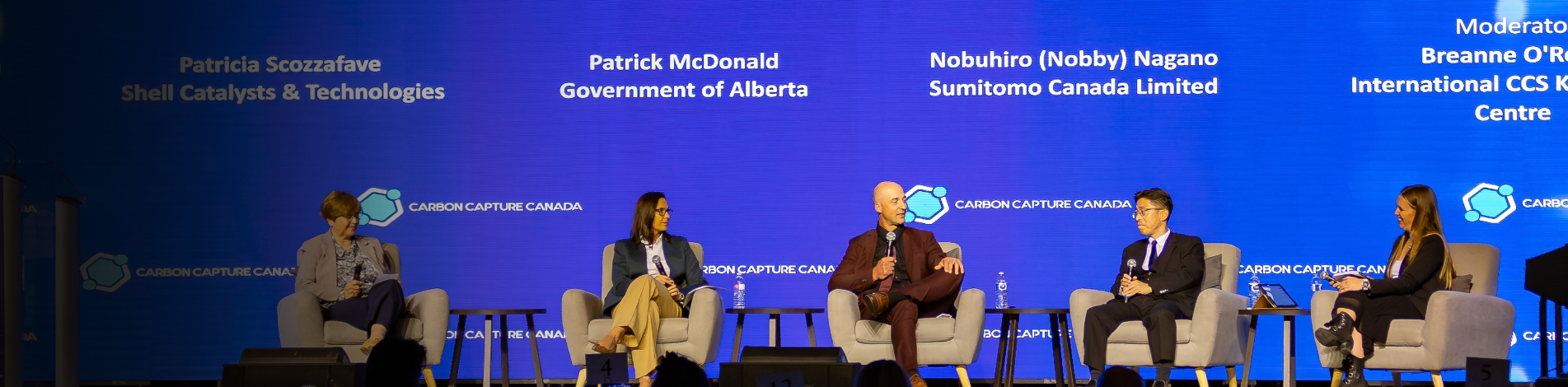
Welcoming international leaders, innovators, and policymakers, the strategic conference unlocks new market opportunities, strengthens international partnerships, and accelerates the deployment of climate solutions on a global scale.

2025 international delegations included:

Australia Flag
Austria
Brazil Flag
Canada
Flags For Web Usa
Indonesia
Norway Flag
Thailand
Uae
World Flags France
World Flags Germany
World Flags India
World Flags Japan
World Flags Singapore
World Flags South Korea
World Flags Spain

Included in your Strategic Conference Pass

Gain Access to:

  • Strategic Conference and Opening Plenary
  • Opening Night Reception
  • The exhibition floor
  • Knowledge bars
  • Complimentary breakfast, lunch and refreshments
  • Along with all the benefits of the Visitor pass
image
Warning!
Beware of email scams

DMG Events has been informed that several exhibitors are receiving scam emails. Please be aware these offers are fraudulent. These scammers do not have any relationship with DMG Events. In accordance with GDPR, CASL and other jurisdictional data privacy regulations, DMG Events will never sell your data to any third-party organizations. Please see our Privacy Policy for more information regarding how DMG Events will process and store your information.