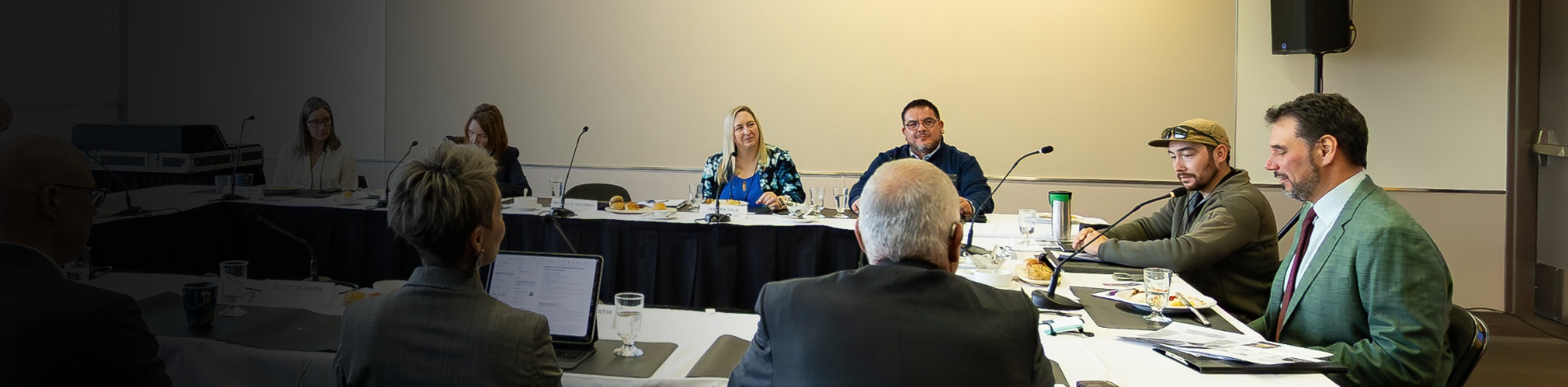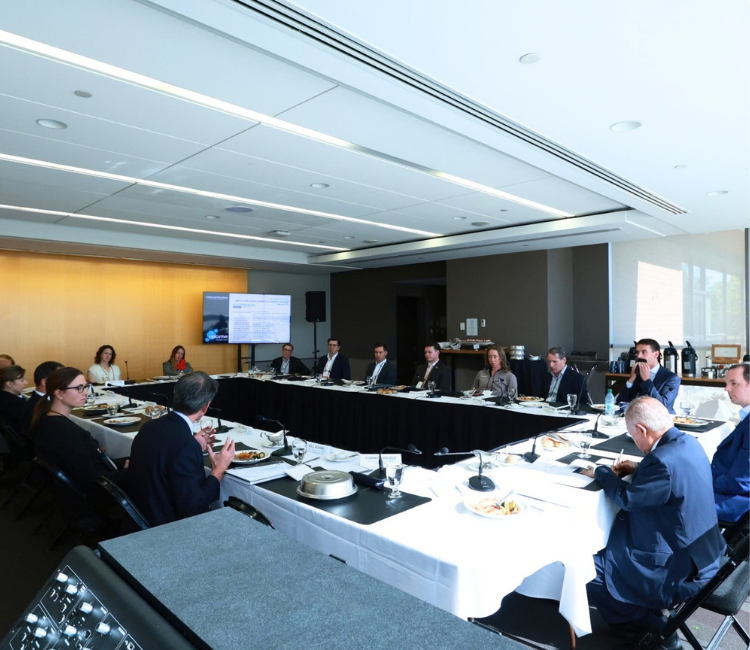
New for this year’s Carbon Capture Canada, the Leadership Roundtables convene an invitation-only cohort of ministers, chief executives, investors and project developers under the Chatham House Rule to confront the questions that will determine whether Canada's CCUS ambitions become bankable, buildable projects.
Held behind closed doors and free of media, the roundtables are built for the kind of candid, off-the-record dialogue this audience expects, where participants can speak plainly about risk, capital, and policy without it appearing in the next day's headlines.
The 2026 program is structured around six roundtables:
Topic: As CCUS infrastructure expands across Canada, Indigenous nations are moving from consultation toward co-ownership, but that shift has been uneven across the industry. This roundtable brings developers, funders, and Indigenous leadership together to define what genuine, front-loaded engagement looks like in practice.
Why now: This week's Pathways MOU has renewed public debate over consultation timelines, with several First Nations along the route saying their concerns have not been meaningfully addressed.
Core questions: How do equity structures avoid being read as compensation for gaps in consultation rather than genuine partnership?
Who's in the room: Indigenous rights holders and development corporations, project sponsors, lenders, and government relations leads.
Key Questions
Topic: Carbon capture economics live or die on the durability of the price signal. With federal carbon pricing under political pressure and Alberta's TIER system recalibrating, project sponsors are increasingly discounting long-term carbon revenue in their FID models.
Why now: Continued uncertainty around federal carbon pricing and adjustments to TIER benchmarks are directly undermining the bankability of capture projects.
Core questions: What policy guarantees or contract structures can credibly substitute for price certainty?
Who's in the room: Provincial and federal policy officials, industrial emitters, project financiers, and carbon market advisors.
Key Questions
Topic: Canada has no shortage of proposed CCUS projects, the bottleneck is converting proposals into positive final investment decisions. This session brings together the capital providers, developers, and policymakers who control the levers that determine whether a project reaches FID or stalls indefinitely.
Why now: Persistent financing gaps, cost inflation, and unresolved stakeholder concerns are keeping several major hub and point-source projects in prolonged pre-FID limbo.
Core questions: What combination of public incentives, private capital, and early stakeholder alignment is actually closing the gap to FID?
Who's in the room: CCUS developers, institutional and infrastructure investors, federal/provincial finance officials, and industrial off-takers.
Key Questions
Topic: This month's MOU between Ottawa, Alberta, and the five-member Oil Sands Alliance commits the Pathways CCS project to stage-gated construction, targeting infrastructure in service by 2032 and full completion by 2035. This roundtable examines what it takes to move from framework agreement to a built, financeable asset.
Why now: The MOU was signed this week, tying Pathways directly to approval of a new West Coast pipeline and setting a November 15 deadline for binding agreements between each Oil Sands Alliance member and government.
Core questions: What has to happen between now and November for the MOU's stage-gated commitments to convert into binding, financeable agreements?
Who's in the room: Oil Sands Alliance members, federal and Alberta officials, midstream and storage-hub developers, and project financiers.
Key Questions
Topic: A pipeline of megaprojects, Pathways among them, is about to test whether Canada's fabrication, steel, and skilled-trades capacity can deliver on overlapping timelines. This roundtable looks at what's needed to avoid the queuing and cost inflation seen in other capital-intensive sectors.
Why now: With Pathways targeting service by 2032 alongside several other capture and storage projects advancing toward FID, competition for compressors, specialty steel, and EPC capacity is intensifying.
Core questions: Where are the real supply chain bottlenecks, and what needs to happen now to keep them from becoming the reason projects slip?
Who's in the room: EPC contractors, equipment manufacturers, labour and trades representatives, and project owners.
Key Questions
Topic: Large-scale CCUS projects are now under construction or operating in Norway, the U.S. Gulf Coast, and the Netherlands, offering hard-won lessons on delivery, cost control, and technology partnerships. This roundtable brings international operators together with Canadian developers racing toward FID.
Why now: With Pathways and other Canadian hub projects entering construction planning, there's a narrow window to apply international lessons before Canadian designs are locked in.
Core questions: Which technology choices and delivery models from international projects translate to Canadian conditions, and which don't?
Who's in the room: International CCUS operators and technical leads, Canadian developers and EPC firms, and technology licensors.
Key Questions
DMG Events has been informed that several exhibitors are receiving scam emails. Please be aware these offers are fraudulent. These scammers do not have any relationship with DMG Events. In accordance with GDPR, CASL and other jurisdictional data privacy regulations, DMG Events will never sell your data to any third-party organizations. Please see our Privacy Policy for more information regarding how DMG Events will process and store your information.